mh_atelier: (Default)
haven't figured out whether this should be a separate page or to collapse this into another page, pending. i still don't know what kind of title i should give this category either

The Guild
An organisation that dedicates itself to maintaining the sustainable coexistence of nature and sentient species; it handles monster and environment research, as well as being responsible for distributing quests and dispatching hunters to specific locations.

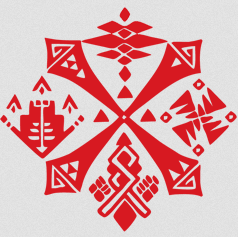
Those who work specifically for the Guild usually have the distinctive pattern of the Guild Crest somewhere on their person. The crest is the visual representation of the guild's key message, that all representatives should keep in mind at all times - respect for nature and the resources it gives, that enable civilisation to thrive.

Exploring and opening up routes, cartography, studying monster territory and behaviour, patrolling towns for unruly behaviour, punishing poachers, and serving as representatives for the Guild in remote locations are just some of the professions available. High physical aptitude is welcomed, but not necessary.

Guild Knights
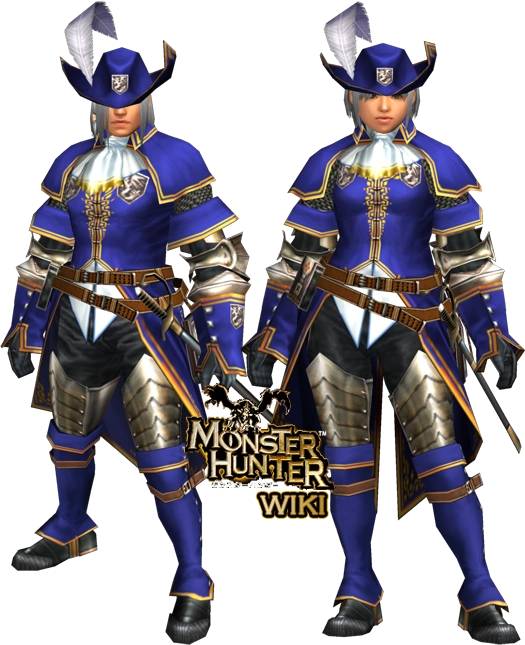
If the hunters are the hammer of the Guild, the Knights are the sword. Guild Knights, either solo or in small groups, are stationed in trade hubs in which the guild is prevalent; they take care of miscreants outside normal jurisdiction and serve as a walking symbol of the guild's authority. Those who see combat wear distinctive uniforms that can be instantly recognised. They accept only the best, and applicants must be thoroughly checked before they are cleared to begin their careers in the Knights.

Wyvern Research Facility (Wyceum)
A branch of the Guild that studies unnatural diseases in wild monsters and provides those who apply with the protective gear to hunt and research them in their natural habitat. Alchemical knowledge is highly welcomed, but they also take scientifically-minded hunters and researchers. The Research Facility takes care of carving up the monster corpses obtained by the guild for materials distribution and rewards for hunters.

Royal Academy (Wycademy)
A highly respected branch of the Guild whose common name is mostly a formal embellishment. The Wycademy's job is to record accurate data on monsters and update accordingly when new reports come in. Mistakes in the data can cost lives, time or unnecessary expenditure of resources. They demand only the best, and so their requirements for entry are quite high.

Central
A smaller but still prevalent group. Their operatives are more concerned with the study, excavation and preservation of ruins and old technology from ancient times. They often request extra hands through the Guild to guard their expeditions. Those who work for Central are known to go abroad for months at a time, only studying one area and submitting constant reports.
mh_atelier: (pic#10070325)
Places of notable interest. From where did your character pass through - and from where did they come?

Kokoto Village
A quiet village in the forest where merchants from other lands often pass through to sell their goods. The village chief is a retired Wyverian hunter who performed many legendary feats in his career. As well as trading in monster parts, their specialties include mushroom cultivation, the growth of rare plants prized for advanced alchemy, and giving many young hunters a head start in life with their training hall.

Jumbo Village
A bustling coastal town with a difficult history. Once a tiny, dilapidated place hardly worth a mention and in danger of being entirely destroyed by the hurricanes of an elder dragon, it was defended and built up to the thriving trade hub that it is today by the efforts of a Wyverian traveller and the current town's mayor, a renowned human hunter who oversees the work that goes on in Jumbo. Renowned for its delicious cuisine, which samples from both the jungle and sea's natural bounty.

Riesengang, Village of the Ruin
A village built upon the remains of a gigantic machine. Prospectors and hunters alike venture into the depths to study the remnants of the past or to seek out treasure. Subterranean creatures are said to live in the deepest parts of the ruins, where it's dangerous to tread, but nobody has confirmed their existence save through oral tradition. Riesengang exports ores of all kinds from their excavations, and has a thriving Troverian community.

Colseit
A town up in the mountains renowned for its thriving apple orchards. Colseit apples are known and loved by many, and Colseit hospitality is beloved by those traveling by airship. Possesses an airship docking station for refueling and restocking for long journeys. It's become busier in recent years. It has a small school for training alchemists.

Zweiteturm
The crumbling remains of a grand and beautiful tower that's seen better days. Though the bottom levels still contain many books, accounts of ancient civilisation seem conflicted. Many of the books contain useful information about where to start looking for certain things and maps of the world, but they're somewhat outdated. The upper levels are completely ruined, and are said to house strange monsters that only live in the tower. Zweiteturm is so tall that it disappears into the clouds. Only the bravest climb to the summit.

Zweiteturm holds the (admittedly unchallenged) record for containing the highest amount of automatons that have ever been recovered in workable condition to date.

Minegarde
A mining outpost that was deemed unsuitable for a town location due to the lack of resources and the prevalence of monsters. It found new life as a hub where hunters and those who trade with them can do business, and thrives to this day. It's equipped with cannons to drive off monsters.

Pokke Village
A snowy mountain town founded by a pair of Wyverian adventurers. Its entrance is marked by a giant boulder of machalite ore. The village chief spends her time pointing hunters to quests that need doing; her Felyne friend Nekoht points hunters to more dangerous quests that also need doing. Pokke sells farm-grown goods to traders to be distributed; primarily berries and herbs.

Hom Village
A Lynian village that recently opened up to outsiders for trade. The majority of the inhabitants here are Homs - Lynians who look distinctly rabbit-like, with memorable speech patterns - but there are many Felynes who live here as well. Hom Village is a self-sufficient township, but they offer services as treasure hunters, assistants and alchemists.

Castle Schrade
The remains of a once magnificent castle and the surrounding township. A calamity so thorough wiped all its inhabitants from the earth, and so nothing remains but this sobering monument to those who once existed.

Equipped with weaponry to drive off monsters. It's rumoured that whatever was responsible for the disaster that befell Castle Schrade occasionally returns to reaffirm its dominance, but this is only rumour. There are also persistent tales that some who might still remember Schrade as their home escaped this total devastation...

Dundorma
A fortified town that has the bad fortune to be constantly attacked by elder dragons. Despite this, the town cheerfully thrives, and has recently shored up its defenses thanks to a traveling caravan that stopped by some time ago. Dundorma sells items useful for those who encounter monsters more often than most. It is the home of the Wyvern Research Facility, a branch of the Guild that funds research into irregular monster behaviour and ways to counteract it.

It also holds several communal alchemist workshops, and encourages alchemists to mingle in hopes of more innovation.

Old Desert
A vast and harsh landscape. Scorching in the day and chilling at night, many things can be found in the sandy plains. Generations of families move from place to place, following the trails of monsters and adventurers, making a living from what remains. It's said that flowers that bloom once every hundred years can sometimes be found here.

Moga Village

Yukumo Village
A mountain village in the Misty Peaks. Renowned for its amazing views, the village peoples' skill at carpentry, and its extensive hot springs, both travelers and hunters visit Yukumo for a taste of mountain hospitality. They export the unique wood, the woodwork of their craftsmen, and the fruits of their agricultural labour (which includes honey, fish and alchemical plants that only grow in mountainous areas).

Traditionally, hunters from this village are outfitted in the village's garb and weapons made out of lumber harvested from the forests of the Misty Peaks, which is said to have grown as hard as the stone it's surrounded by.

Loc Lac

Port Tanzia
mh_atelier: (Default)
What kind of world is this?

This game is set in a world that's full of ruins, mysteries, and a whole lot of super-sized monsters in a lush and thriving ecosystem a whole lot bigger than your characters.

This world isn't exactly untouched by technology. The remains of civilisations that came before are clearly evident. But this is also a world in which those things have been left, mostly, alone; they are overgrown monuments to a time that no longer exists. Nature reigns.

Civilisation in the present day takes the form of small and scattered villages, traveling caravans, and other such settlements. While travel between them is possible and thriving - whether it's on foot, via boat or caravan, or even by airship - the ever-present need for defense against the monsters in which these people share their world is there.

And there are many, many monsters. Wyverns of all shapes and sizes, leviathans lurking in the deep sea, gigantic arachnids, territorial insects - these are just a few examples of what fills the world. And then there are beasts of myth and legend, elusive, gargantuan, the details of their existence lost - if they truly exist at all. Information of these vast creatures is coordinated by the Guild, an organisation made to maintain the balance of the ecosystem.

The adventure of a lifetime is sure to appear from out of the mist. And if it doesn't - it's worth simply seeking out, too. There's something to be said for the joy of the chase.

Monsters?

Monsters are one of the defining backbones of this world (perhaps more literally than some might expect). The cultures, lifestyles and economies of towns and cities everywhere base themselves off what monsters live and thrive in the area, and the variety of habitat and species means that even though two people may come from towns with the same general climate, their culture may be quite different.

Of course, living in such a wild world has its dangers. A small village with no dedicated hunter may simply be wiped off the map by an injured monster seeking out easy meat, or a fight for territory with an invading species. Even with hunters to defend settlements, it's often easier to simply evacuate rather than hold their ground to constantly beat off attacks. And, of course, monsters are territorial. They often take offense to smaller, squishier creatures enroaching on what they believe to be theirs - and they often have the destructive power to back it up.

Monsters are generally grouped by common physical and behavioural traits. The exceptions are those that fall under the Elder Dragon category. Too big, elusive, destructive or otherwise are lacking in information in vital areas, they are the creatures of myth and legend - and for those who don't involve themselves with monsters in some way, the most likely way to meet one is to stumble upon the aftermath or suffer the effects of their presence.

Ruins?

Even the oldest Wyverian - a species said to live hundreds of years - cannot remember a time before civilisation was the way it was today. But the grand and hollow husks of machinery and architecture that litter the landscape - and the ancient automatons that are occasionally discovered - says otherwise.

Once, there were magnificent structures, and awe-inspiringly complex technology, and the people who lived and thrived there commanded great power. The echoes of their presence are still felt in the present day.

But they are only echoes. The old secrets are long lost; only scraps of their legacy and the feats they performed remain. Though it's possible to find that which was sealed away long ago, and to study and restore relics of the past to a form that's usable for daily life, they are ultimately the only remaining pieces of a much larger puzzle. Everything else was swallowed up by nature and whatever happened to those civilisations, so many centuries ago.

Where do I start?
For your own reasons, you've joined up with an exploratory caravan that journeys in the field, sending back reports of new monsters and new discoveries. Whether it's for fame, glory, revenge, to meet new people or see new places...as long as you work hard, you'll be rewarded by the Guild.

And perhaps, you'll even be rewarded by finding what you seek.
mh_atelier: (Default)
What is alchemy?
Alchemy is a technical art passed down by Wyverians and certain humans. Using information from books, the traditional teaching of a mentor, and knowledge of the properties and limits of materials, alchemists are able to create items through synthesis.

Many of the ruins that now scatter the land are thought to be from ancient civilisations who used alchemy in ways unknown to the people of the present day.

All alchemy is ultimately performed in a cauldron, though methods vary from mentor to mentor.

What is synthesis?
By gathering ingredients, an alchemist transmutes appropriate materials into items for everyday use. They can also repair and create mechanical parts from blueprints, as long as they have the right materials to do so.

How does an alchemist gather ingredients and make items?
An alchemist gathers ingredients over the course of each month - enough to make some basic and advanced items. This process can be handwaved, though keep in mind a realistic time schedule: synthesis takes time and energy, and they need to sleep, eat and have contact with others.

As a rule of thumb: the more complicated the synthesis, the more time and energy it will take.

Areas on the map will show what kind of ingredients are most likely to be found there, and will change with the seasons and monster activity. The rarer the ingredient, the more of a challenge it is to get.

What can they make?
There are four tiers of item:
Basic: Items that only need basic ingredients. Simple but undeniably useful, these are good for daily life.

Advanced: Items that use a basic item in their composition. Slightly more complicated to make; it takes longer. Things that wandering doctors, hunters, and explorers will find use for in their travels.

Complex: Items that require a great deal of concentration to make. Ingredients for them need to be prepared beforehand or gathered. For emergencies and major threats. Requires a quest to prototype.

Ancient: Items that come from ruins of ancient civilisations, or blueprints. Need to be examined carefully before synthesis is attempted. The results are varying. Requires a quest to repair.

Alchemists can make basic and advanced items without a quest, though they should show up somewhere in your threads. Complex and Ancient items need quests to collect ingredients and recipes for.

Complex items do not necessarily need recipes to be made, especially if they are an enhancement of an item that already exists or it is fairly reasonable to infer what will come out of it. (There are only so many things that can come out of a synthesis that involves explosives).

If the character is working from a blueprint they found on an expedition, they probably already know vaguely what they want to make, even if they don't know what it's for.

In all cases, new items can be declared at AC with the appropriate evidence, similar to the rare eco system, and the guild will reward the character with items like alchemy books and rare ingredients, or just another payment of zenny.
mh_atelier: (Default)
Quests

What is a quest?
A quest is a major undertaking for the character in question. Hunting a large monster, exploring and expanding the map, rescues, harvesting rare ingredients for synthesis, holding a party for the camp, finding an injured monster and caring for it, taming an animal, fitting someone for clothing...as long as it takes a significant amount of effort and is a log that includes more than one person, it counts as a quest.

You need one finished quest, as well as at least two threads with different characters (you cannot use two threads with the same character), to make AC. The threads have no comment count, but they need to show the character was doing something other than go on their quest, even if it was just making small talk, falling into marsh mud, etc. Talking about their quest after it's happened (or before it's happened) is fine.

Caravan posts will be made twice a month to provide opportunities to mingle, but characters can also meet in other logs or through living area visits (the equivalent of the ic inbox).

What counts as a finished quest?
The quest log has come to a conclusion and accomplished the goal. As long as the quest is finished before AC is tallied, tagging can go on for as long as is necessary, but it needs to be concluded to count as AC.

Remember, it's a monumental effort. A monumental effort shouldn't take like five comments to finish.

What about party logs?
Your character should be active in the log itself. If they were cooking for the party, they should be personally involved even if it's just to ask people if they liked the food or to ask for help in cleaning up - after all, that's a lot of effort!

What if I'm away for the entire month?
Sometimes, quests can take a very long time. A character might be hunting the trail of an unknown monster or be lost in a labyrinth of broken ruins.

Provided that the quest itself is finished by the end of the month, you can submit the month-long quest as your sole AC proof.

However:
-You will need to provide three different threads in the following month.
-Your character cannot take another quest that month due to the guild's concerns about your character's health in a harsh environment.
-If your character is away when the caravan tallies the report at the end of the month, they cannot submit their quest docket for that month and can't use the results of their quest to help anyone or build anything - they're not physically there to haul in their items. They also can't spend their spare income - they're not there to use it!

Your character will pick up their pay and be able to use their materials from the previous month, though, so they have more to spend in the coming month.

About exploration: the Rare Eco Discovery mechanic
The map will start small, as representation that you're in unknown lands. The only way it will get bigger is with exploring. Explorations can be mounted directly as the main point of a quest, or done in the process of doing other things, like hunting monsters, gathering ingredients, etc.

Characters can explore in any direction and find what they like on the map. Once per quest, every character involved in the log can find something significant.

When they're starting out, this can be anything from monster signs and trails to discoveries of paths that might lead to ancient ruins.

When the activity check rolls around, submit a description of the discovery with evidence linked, and the discovery will be catalogued in some way.

This gives your character a single 'rank' in discovery. This is the Rare Eco Discovery scale, and it increases as characters make successive discoveries (it increases until it hits 4). It represents your character's persistence and progress at tracking down the source of the mystery item they found.

For an example of how the discovery scale works, let's say a character discovered signs of an unknown monster.

Rank 1: The character finds strange tracks, odd castoffs from the unknown monster, or evidence of monster activity they haven't seen before.
Rank 2: Now the character knows what to look for, they can identify further signs. They can begin to narrow down an idea of where this monster may be found, and find more evidence to support their claim (fresher castoffs, fresher evidence, etc).
Rank 3: The character is getting closer to their goal of finding the unknown monster's territory. They can begin to make semi-accurate guesses about what the monster might be like, what it's most likely to eat, or where it's likely to be found.
Rank 4: The character tracks down the monster in its lair, territory or in pursuit of a food source. A new monster has been discovered and will be NPCed by the monster mod; the character may be chased, engaged in combat or even be totally ignored. In any case, the character has gotten the very first glimpse of the new monster, and can add it to the bestiary! The guild lady will be happy to write down the details for them, or they can submit the report themselves.

After Rank 4, the rank resets to zero, until a character finds something else.

What if I have more than two threads because I'm submitting evidence?
Submit them anyway. You're not limited to two threads and your log - that's just the minimum you need to make AC.

Base Camp

Mar. 9th, 2016 10:21 am
mh_atelier: (Default)


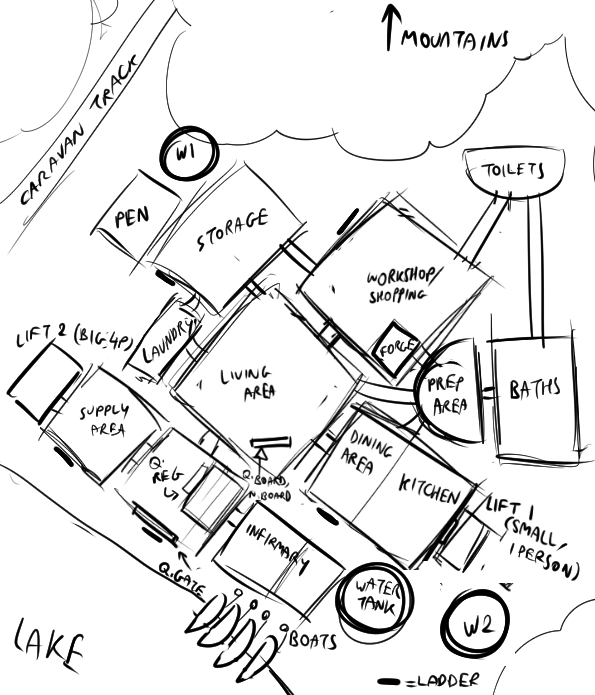
The camp itself is raised above the ground by a network of supporting stone pillars carved from the local mountains, and the wooden platforms on top are linked together by small footbridges. Ladders that can be rolled up and tied when not in use provide access to the ground.

There are four boats moored at the edge of the lake, each able to seat four people comfortably. Made of monster bone with hide sails, each boat carries oars and an item box for supplies. A woven blanket is also provided, should hunters or other personnel want to sleep in the boats.

The lake takes half a day to cross to the other edge at its widest point. Walking takes most of a day, which is good for exercise and night hunting.

A basic pulley lift has been provided, to aid with receiving supplies and other items that are too unwieldy to carry up a ladder. Up to four people at once can help pull up the lift and its contents.

Base camp contains:

-A basic, open-air kitchen with a stove, a medium-sized ingredients and utensils cabinet, an icebox, and several movable cooktops. It has a hide cover that can be pulled over to protect the equipment from rain and general weather. It has a collapsible hide tub about the size of a kitchen sink that can be used to do dishes.

There is a large, circular table that can seat up to eight people comfortably, four benches for that table, and two long benches for extras. No cover is available for the canteen area; if it rains, seek shelter, or just eat anyway.

A felyne chef from the Guild is in charge of basic cooking.

-A large living area covered with monster hide that's resistant to slipping, even in wet weather. Tents and shelters are set out here. There are some communal shelters. All shelters and tents come with bug nets, or are provided with them to screen out small and large insects.

-Two large, roughly carved stone baths each able to comfortably hold approximately 8 people each, and separated by a screen. They're shielded from the elements by a large hide that can be rolled out and extended to give people some privacy when bathing. (Ignore the fact that the hide in its entirety appears to have been stitched from the spare skins of several Rathalos. Or don't. It's interesting to look at, at least.)

The bathing area also has an extension for keeping clothing dry, a small alcove covered by a waterproofed skin for changing, and a basic supply of soap along with two hard brushes. There are also some spare towels, which have the guild logo on them.

Water must be manually pumped from the lake to fill the baths, but a heater attached to the pump (it runs on coal and needs to be lit beforehand) heats the water as it's pumped through; the simple pump also acts as a bellows for the coals, making it easier to get a fire going that's hot enough to heat the water.

The area for changing and keeping clothes has its own platform, footbridge access, and ladder. The baths have their own separate platform, covered in monster hide that will absorb heat and stop the wooden platform from burning.

-Communal storage for armor, weaponry and items. There are four item boxes, eight cases that are 'one-size-fits-all' for weapons, and four very basic wooden poles for armor stands. If you didn't bring a means of keeping your own items, you're free to use what's provided to you by the guild, but they can't be locked.

On the other hand, it'll probably be really easy to find whoever stole your stuff...

-A quest board and a small sheltered area for the guild representative to sit. The shelter contains a small supply of writing utensils, stamps, and paper, a small desk, and a stool. A trained messenger bird on a perch also lives here, for emergencies. You can send letters off with the guild lady's permission, but you're better off just giving it to the caravan when it comes by.

-A small pen for domesticated animals to be kept in and fed. Used for the supply caravan's hard-working Aptonoth team, characters can keep pets or other animals they find and tame in the jungle in this pen. It has a collapsible shelter that can be used to keep the rain off.

Naturally, this pen is on ground level.

-An iron trough one of the guild members salvaged and repaired. Good for washing clothes. Washing lines are staked out nearby, and the guild has also provided a waterproofed cabinet attached to a burner, that can be heated with coal or with monster materials. This cabinet dries clothing quickly.

The settings for the burner are as follows: low (warm), high (hot), and 'empty the flame sac into the funnel and back away just in case' (very hot). The guild advises users to be careful opening the cabinet.

-A basic forge. A young Wyverian woman and her Felyne assistant take care of extensive repairs and strengthening on armor and weapons, as well as the forging and crafting of new ones.

-A basic infirmary. It contains four cots and has a shelter cover that works like a large tent. It comes equipped with a box with basic medical supplies like bandages and poultices, a box for waste and 'spare parts' (scale shrapnel, claw fragments, etc) and has its own small furnace and equipment to boil water for sterilising tools and washing wounds.

-An empty platform, similar to the living area, for workshops and shopkeeper stalls.

-A pit latrine has been dug some way away from the lake. A shelter for privacy and to keep the rain off has been constructed above it. It has its own platform, and is much lower to the ground.

The shelter can hold four people at once, and has dividers to serve as 'stalls'. There is also a bucket of water in each stall.

-A large rainwater tank with sand filters and a screen to keep out trash.

-Two watchtowers at opposite sides of the camp. They are 'walking watchtowers', which means they can be disassembled and set up again as needed.

Income

Mar. 8th, 2016 04:18 pm
mh_atelier: (Default)
The frontier is a harsh place to live. To acknowledge that, the guild sends a monthly payment to each character. The dockets are carried on the caravan that brings in new arrivals.

The base payment covers a character's basic needs for the month (sustenance, upkeep of equipment, purchase of basic material if the character needs it, etc) with a little to spare for emergencies or whatever the character chooses. On this basic income's spare money, characters are able to do one of the following things:

-import an item from home that month
-hire a pack animal from the guild for a month (good for long journeys)
-ask for a 'luxury' survival item (a special flame sac heater that can heat enough water to provide a hot bath, a super-soft pillow full of gargwa feathers, a mirror, etc)
-use their spare income for that month to contribute to another's personal structure or their own (like turning in a quest)
-hire an assistant or a more experienced mentor to help them with their profession or another's profession for a month
-buy extra tools, supplies or equipment, either from the caravan or from shopkeepers
-and more!

Characters will receive a stipend based on their quest docket for that month. One quest = an extra payment of spare zenny. It doesn't matter where the quest comes from; the guild rewards teamwork and helping out your fellow townsfolk. A happy town works more smoothly together, after all!

Characters who are shopkeepers measure their items' worth in how difficult the items were to get and how uncommon the items are. This provides the value.

Very rare items (difficult to get + hard to find eg. distorted fragments) = two quests' worth of zenny + basic income
Rare items (difficult to get + easy to find) = one quest's worth of zenny + basic income
Medium to low rarity items (easy to get + easy to find) = can be afforded or is covered by basic income

Shopping and transactions can be handwaved or played out at player discretion. Barter trade is also fine!

Assume that most shopkeepers tend to make a quest's worth of zenny on top of what they get from the guild due to other characters needing ingredients, repair materials, etc.
mh_atelier: (Default)
Sword and Shield
Small and lightweight. The light shield can stop glancing blows from reaching the wielder. The sword and shield can be used in combination to pummel the opponent. Easy to move with and sheathe. Often called a 'beginner's weapon' due to its accessibility.
Dual Blades
Small and fast. Requires the wielder to get up close to deliver rapid strikes with both swords and harass the target before moving away. Easy to move with and to sheathe in emergencies.
Great Sword
Huge, heavy and slow. The blade can be used to deliver deep wounds. It's a powerful weapon, but moving around with it is difficult and limits speed and mobility. As expected of a heavy weapon, it takes time to sheathe. You can slap other people with it as well as your target, but they won't like you very much.
Long Sword
Offers moderate speed and weight. Has the same reach as the great sword, but less power behind its blows. Skilled users can take advantage of its lighter weight to perform faster combinations of strikes. Unskilled users may aim badly and end up knocking their friends down instead. Due to its length, it takes time to sheathe.
Hammer
A heavy impact weapon that slows the user down more than other weapons, but less so than the great sword when unsheathed. Able to knock out monsters with enough blows to the head. Often, hammers forged from monster parts are modeled into a crude approximation of the monster's head, which is either tasteless or amazingly cool depending on who you talk to.
Hunting Horn
A heavy musical instrument that also doubles as an impact weapon. Surprisingly tough, and has a longer reach than its cousin, the hammer. Each instrument has its own unique sound and shape. Users can play songs to boost the energy of their teammates, or just to annoy them a lot.
Lance
A large and pointy spear with a large and not-pointy shield. Lances are long, so those who use them tend to be putting some distance between them and the monster when they attack. They're good at blocking monster attacks. When they charge, they're bad at stopping. When they're not charging, they're slow moving.
Gunlance
A lance that fires explosive rounds. It can only shoot a short distance, but that's fine if the short distance is to the monster's face. Firing lots of shells means that the lance becomes a lot less pointy than it was before. Users can supercharge the mechanism to create powerful explosions, but it has to cool off afterwards. Like the lance, it still has a shield, and like the lance, it's a slow and heavy weapon.
Switch Axe
One of the two mechanical 'switching' weapons available. It has an axe and sword mode, and contains special phials that charge through striking the target. The energy contained within can be released when the weapon is in sword mode. It has a lot of momentum, so the wielder should make sure that they're not getting carried away by either wild swings or by how cool they think their weapon looks.
Charge Blade
The second and newer 'switching' weapon. It has an axe mode, a sword mode and a charging phial system like its predecessor, the switch axe. The sword mode comes with a giant shield that can be used to block attacks. It can also link with the sword to form a giant axe, which can be used to release the gathered energy of the phials. It creates large explosions that will cause most monsters to think twice, but that's only if you don't miss...
Insect Glaive
A polearm that comes with an insect companion. It can be commanded to attack through the use of pheromones, and brings back different types of monster fluid to its master. It has a mechanism that can be used to pole vault. Feeding the insect certain nectars will change the way it grows and engages monsters in combat. Feeding the insect treats does nothing for its combat skill, but it will probably love you more.
Tonfas
Two lightweight poles that strike monsters rapidly with force using a propulsion system. The propulsion system fits onto a user's arms, like gauntlets. Tonfas are light and fast. They allow a user to propel themselves into the air, and sometimes into the waiting jaws of a monster, so be careful.
Light Bowgun
A small gun that can take many different types of ammunition. It has the ability to fire all the rounds in its clip in a steady stream. It lacks the firepower of its much bigger counterpart, but on the other hand, it also lacks the ability to weigh down its user so much that they can hardly walk. It's somewhat customisable.
Heavy Bowgun
A very large gun that can take many different types of ammunition. These high damage weapons are often designed to look like cannons or heavy artillery. It has the ability to temporarily become a turret and fire all its ammunition, but it's not recommended to do this while the monster is charging at you.
Bow
A traditional weapon that's been somewhat enhanced to hunt bigger game. Arrows can be dipped in coatings or specially treated beforehand to give them certain effects. Being able to shoot often and with accuracy while constantly moving is a skill that every bow hunter should learn. Unlike bowguns, you can pick up your arrows if you miss. On the other hand, when you're hunting monsters, you don't want to spend too much time picking up arrows.

PROTOTYPES
"Just because we can, doesn't mean we should?"
Due to new research, steps have been made towards possible new weapons. However, these are untested prototypes, and hunters who wish to use these are warned that they may be unreliable, volatile or not especially made for direct combat.

Ignition Staff
Based on staff designs often favoured by alchemists, the ignition staff is elegantly carved out of a material that looks similar to wood. The topper is, depending on element, carved out of the appropriate materials and fitted to the main body. The user strikes a monster or an obstacle with the staff, giving it the appropriate friction to activate the effect. Try not to block with it.

-Slime Staff
Has a shining cobalt staff topper carved out of Brachydios materials. The slime that gives Brachydios its explosive properties grows only on the top. Don't wipe it off.

Dual Pistols
For the gunner who feels that one gun simply isn't enough. Individual guns need to be reloaded more often, and the mechanisms often get stuck, but the special composition of the bullets provides different options for ammunition. Allows users to move and sheathe even more quickly than the light bowgun, but has a surprising amount of recoil and bullets must be loaded individually. Aim carefully - the multiple barrels fire more shots at once, but spread them across a wider area.

-Yianfoot Pistols
Named after the distinctive toes of a certain bird wyvern, this pistol type allows users to take on small packs of monsters. Good for clearing areas, but bad for precision aiming.

-Multishot Pistols
Developed by a Wyverian who lives in Dundorma, these pistols have multiple barrels that need to be loaded and rotated by hand. Good for more precise, straight shooting.
mh_atelier: (Default)
Application Sample

OOC BASICS
Player name, age, contact. Character they play and from what canon. Brief dot point summary of relevant OU history compared to AU history. Any relevant personality changes yes/no? Explain why these changes occurred.

If a setting native OC is played, dot point their history and go ahead.

set out like an actual, IC application form

NOTE: CHARACTERS CAN LIE ON THIS APPLICATION OR GIVE NON-ANSWERS (especially on anything past basic questions...though some people may have reason to lie on basic questions). OOCly note if this is the case, and provide reasoning on why they're doing so.


THE BASICS
Name: "What is your name? First name, last name format, please. Um, unless you totally don't have a last name. That's cool too!"
Age: "How old are you?"
Species: "All applicants aren't made the same. Are you a human? A Wyverian? A Troverian? Even a Lynian?? How exciting! We're super happy to have you!!"

Humans: Humans are humans, the same as they've always been. Those who choose to be hunters train very hard to prove themselves worthy of their titles.

Wyverian: Wyverians are thought to have evolved from lizards, much like the wyverns that inhabit this world. Possessing long, pointed ears, digitigrade legs and four fingers on each hands, Wyverians have lifespans much longer than humans, and reach maturity more slowly than humans do. They are master smiths; though some prefer to stay home and garden, many take up the hammer in other villages, or become hunters themselves.

Troverian: Troverians, like the Wyverians, are thought to have had a cold-blooded ancestor in their history. Generally, Troverians are half the height of humans or less, and supposedly have a smaller lifespan, reaching maturity more quickly than humans do. Workaholics who learned the difficult art of forging armor and weapons suitable for hunter use from the Wyverians, their stamina and endurance is unmatched.

Leviatharian: People of the sea, thought to have evolved from fish. Traditionally, they live in seaside villages and don't tend to spend much time on land, but these traditions seem to be changing. They have natural, translucent patterns on their skin that vary uniquely from individual to individual, and their fingers and toes are webbed. Their nails are sharp. They are excellent swimmers.

Lynians: Children of the land. Lynians encompass a broad range of species, distinguished by their ability to form coherent groups and communicate in a similar way to the other races; though Felynes, Melynxes, Urukis, Homs and Shakalakas are the only known Lynian groups so far, more certainly exist in this world.

Automaton: Ancient robots excavated or rebuilt by the Guild. There are two types; those that are called 'automatons' usually look like humans, with some mechanical additions. They always have a windup key sticking out of their head, and are generally more delicate in their composition. They need a fair amount of retuning and repair.

The Artian models are tougher, but look much less human. Though they are capable of complex thoughts, much like the automatons, they tend to be more combat focused in their priorities. They need less maintenance than automatons, and are more physically durable.

Home Town: "Where did you come from?"
[summary for some of the villages that exist in the MH and Atelier worlds go here.]
My hometown's not on here. "Then you must come from somewhere that we haven't seen yet! Can you do that describing mojo and give us a name and lay down some infos about your town, so we can put it on the map?"
Profession: "What do you do for a living?" (Examples: Hunters, alchemists, monster riders, etc.)
Health: "Are you healthy, or is there something we should know about? If you have medical conditions or other special needs, please put them down below."
Accommodations: "What do you need to stay fighting fit? The Guild appreciates all volunteers, and will do our very best to give you the care that you need to stay in top condition out on the frontier!
Any details about your mental or physical health - and what you need to give them a helping hand - are here. Be careful out there, okay?"

ITEM DECLARATION
Weapon Type: "What is your weapon?" [If you have no ideas, pick from a weapon type here. Otherwise, tell the nice lady what it is and whether it's a melee weapon or a long-range weapon.
Damage Type: "What do you normally use your weapon for?" [In the case of shifting weapons, pick the damage type of the primary use.]
Weapon Quality: "How nice is it? Can I see?" Quality = rarity. Custom-made basic starter weapons can go up to Rarity 3. Most basic weapons start off at rarity 1.
Special Qualities: [Some weapons may have added elemental effects, or special types of damage (such as poison or blast damage).]

Armor Type: "Are you a smashy smashy or a shooty shooty?" Blademaster armor is made to take attacks. Gunner armor sacrifices defense for mobility, making a wearer more fragile. Unlike in the games, blademaster armor can be used even if the character uses a gun, and similarly gunner armor can be used for a character wielding a melee weapon.
Armor Quality: "How tough is it? It better be tough." Armor quality is ranked by Low, High and G, with G boasting the most defense and low-rank being basic starter armor.

Other Combat Items: "Are you packing something else in there? Tell us all about it!" This is for characters with unorthodox weapons that don't fall within the melee/gunner range, like bombs, animal companions or alchemic devices that aren't strictly weapons.

Equipment: "What are you bringing with you? Only bring what you absolutely can't live without, okay? We only have so much space in the caravan, and if you weigh things down, it'll take longer." This is for characters who have special equipment related to their profession; a chef's tools or an alchemist's cauldron, for example.

MORE PERSONAL QUESTIONS
Your goal: "What are you aiming to do? What's your ultimate dream?"
Your reasons for volunteering: "The frontier town is a pretty harsh place, you know. It's just a really basic outpost in the wilderness. If you've got some super duper personal reason, you don't have to tell us, but it'd be great if you could give us an overview!"
Your main inspirational person: "Some people pick family members, or famous hunters, or stuff like that. Do you have someone like that?"
Why you chose your job: "What's your motivation for doing what you do?"
Any hunters in your family: "Generally, kids of hunters know what to expect. If you don't - don't worry, we'll give you the crash course on the way in. It'll be totally fine!"
How you got here: "Aptonoth? Balloon? Caravan? Or did you make like a guild rep and get here on your own two feet?"
The most important moment in your life: "When did inspiration strike and you went like 'Bam! Oh shoot, I know where I'm going?' Give us the rundown!"
What's your best quality?: "What's the thing you're super, duper proud of? Write as much as you like! You know, we had someone who wrote like a whole page once?"
And what's your worst?: "What's that super embarrassing thing you did once? Okay, no, I wouldn't ask you to do that! But we need this for research purposes. Cocky hunters are usually monster chow."

FREE CHOICE QUESTIONS
Please give explanation for your choices. Choose 3 questions to answer.

What is your favourite...
...monster?
...place?
...personal item?


If encountering an unfamiliar monster in a familiar place, would you...
...flee?
...call for help?
...stand and fight?
...something else?
Give your reasoning as to why. If picking the 'something else' option, elaborate.

You've found a lost item that appears to have some monetary value. It has no identification, but it was recently lost. What would you do with it?

You come across a sick monster. You know that it is ferociously territorial and it could easily kill you if it was healthy for intruding in its territory. However, you know the illness, and you could treat it effectively. Would you...
...kill it?
...leave it be?
...nurse it back to health?


You encounter something that you fear on a rescue mission, where peoples' lives are at stake. There is no way to go around this obstacle; you must face it in order to continue your mission. What would you do in such a situation?

What is the most important thing to focus on in your life? Past, present or future?

What are your feelings on monsters?

You come across an unguarded nest. Not knowing whether the parents have been killed, driven off or they're simply hunting for a meal, you would...
...take the eggs.
...smash the eggs.
...leave the nest alone.


You come across a formerly lush area that appears to be drying up. What would you do, knowing that the area is the main feeding ground of a monster that terrorises nearby villages and attacks caravans, but also knowing that many people depend on the area for their livelihood?
mh_atelier: (Default)
monster hunter but with an added alchemy system/resource gathering element to allow characters to have a slightly higher level of tech (being able to synthesize, analyse and build more advanced structures and devices from monster parts and ingredients with traditional cauldron alchemy and copying/salvaging/repairing bits and pieces from unearthed ruins.

-character concepts would be able to pull from ancient civilisation technology, but they'd have to be very old and in some cases in need of repair, like robots)

synthesising itself can be handwaved but characters will at least need to log out grabbing what they need/traveling out/being accosted by weather or monsters or what have you. ingredients are rarely in places that can be easily gathered- characters need to bring along appropriate tools to harvest, climb trees, fight off monsters who are threatening to eat them, etc.

Alchemists are able to make new items to help with the hunt; think dust of life, steam bombs, etc. Portable powders, edibles, bombs, and such to help hunters' quality of life while they're out traveling. They can also help expand the town with their inventions and such, as well as make medicine.

Even making food with alchemy is possible (though you might have to fight the cooks for ingredients...)

characters would be braving wild seasonal weather (the setting concept so far is a tropical rainforest basin surrounded by mountains) and monsters to build and expand a frontier town in the wilderness

deployment site is on a shallow lake in the 'drier' seasons; when rainfall becomes heavier it overflows

naturally, they'd be hunting and discovering new monsters (canon ones from the MH games will be present, but there will be a way to submit 'evidence' such as behaviour, tracks, things a monster has left behind, etc for new monsters that will be catalogued and eventually result in an encounter with a player-created monster)

this can also apply to the discovery of existing monsters in a new area

-there would need to be a dedicated mod for NPCing monster encounters on player request and for events

they'd also be exploring and changing the terrain, making it easier for supplies to be sent back and forth or airships to dock rather than dropping characters via ladder as well as establishing contact with other people who might happen to be in this unexplored land (monster riders, other hunters, lynians, etc)

blueprints, ancient tech and other remains of ancient civilisation can be discovered

so basically low fantasy adventure and SoL exploration game

no network, since characters are all crammed in the same place together.

AC would be at least one finished 'major' log a month (whether it's hunting big game, exploring, treasure hunting, spelunking, gathering ingredients, etc.) and evidence (threads with a comment count?) that the character was also doing something else, like small monster hunters or basic gathering or like TALKING TO PEOPLE OR RESTING; small hunts can be handwaved

finished logs can be cashed in at AC time to build structures. each log = 1 quest, and each structure depending on complexity and size is worth a certain amount of quests and in some cases requires certain monsters to be logged in a hunt, so people can cooperate to build important structures quickly

-structures are logged under 'personal' or 'town': either characters can put their quests into something they personally want, or use it to contribute to building the town.

-other characters can use their AC points to help others!

area maps will indicate where ingredient types can be found for alchemy/building + what monsters are likely to be found there as well as monster behaviour for that month changing what's available

rarer ingredients = stronger monsters = characters travel farther to reach an area

characters can be shopkeepers! each ingredient type and rarity tier will have an estimate of income for selling; characters who want to sell weapons or armor have similar estimates

the guild pays out a similar estimate per fortnight/month?? of time spent in the frontier town and pays extra for quests completed, so characters have a vague estimate of money and players don't necessarily have to number crunch because down that way madness lies

can use their zenny to buy or request certain things from the caravan that comes fortnightly, like creature comforts, personal effects from home, etc. paying for shipping costs, essentially. they can also commission certain equipment or pay for assistants that will become player-hired NPCs that the player will 'control' to some degree (ie, a felyne sous chef for a character who is a cook, or a young wyverian assistant who's trained as a blacksmith for weapons manufacture).

travel times are important - characters may spend a whole month out of town and unreachable if they travel far enough, or they want to spend time out to make contact with new villages

new characters apping into the game, depending on backstory, can be introduced through other people's quests and not just through fortnightly/monthly caravan dump

monthly mod posts will include special missions from the guild or event hunts that involve more than the usual 4-man quest (such as an event log to drive off a giant monster threatening to crush the town)

"I would say, rate each monster with 1 - 5 stars worth of difficulty, and players need to have fought x many 1monsters to qualify for 2 and so on

Do one 1star to qualify for 2stars, and then maybe 2 more 1stars or one 2star to qualify for 3stars, and so on

But no repeat monsters allowed

So you do all that and then hit the high rank wall at 5 * or something"

monster urgents are grouped by people waiting to rank up - processed monthly

Characters need a hunting log/thread tracker that keeps track of what they've hunted so far/their rank

Areas are rated with a danger meter of 0 to however many stars, to signify the strength of the monsters in that area and the danger level of the area. Characters can sneak out without the appropriate star levels, but the monster mod will take care of NPCing encounters at that level.

A character's equipment and weapon has a value in [x weeks of income] and is rated by quality tier. Assumed upkeep unless stated otherwise.

Characters can issue their own quests on the notice board, description, title and all, or simply ask other characters to help them. They're allowed to pick from what monsters are currently known to be available if they want a target quest, but mostly picking areas and asking for help with items/small monster slaying/etc will work fine.

Profile

mh_atelier: (Default)
Monster Hunter: Atelier

March 2016

S M T W T F S
  12345
6 7 8 9 10 1112
131415 1617 1819
20212223242526
2728293031  

Syndicate

RSS Atom

Style Credit

Expand Cut Tags

No cut tags
Page generated Jan. 17th, 2026 08:32 pm
Powered by Dreamwidth Studios